

Contact Adhesive Vs Super Glue: Which One Is Right For Your Project?
Heading
For fast, small-scale jobs with hard materials, super glue is the clear winner. For larger projects, flexible materials, or where strength and durability matter, contact cement stands out as the top choice.
Whether you’re repairing a cracked ceramic mug, bonding large surfaces like wood panels, or looking to bond glass ornaments, the type of glue you use makes all the difference.
Contact adhesive and super glue (a cyanoacrylate adhesive) are two of the most common resin-based adhesives used for bonding various materials. In this guide, we break down the differences, benefits, and best use cases for contact adhesive and super glue so that you can make the right choice.
Comparison Table: Contact Adhesive vs. Super Glue
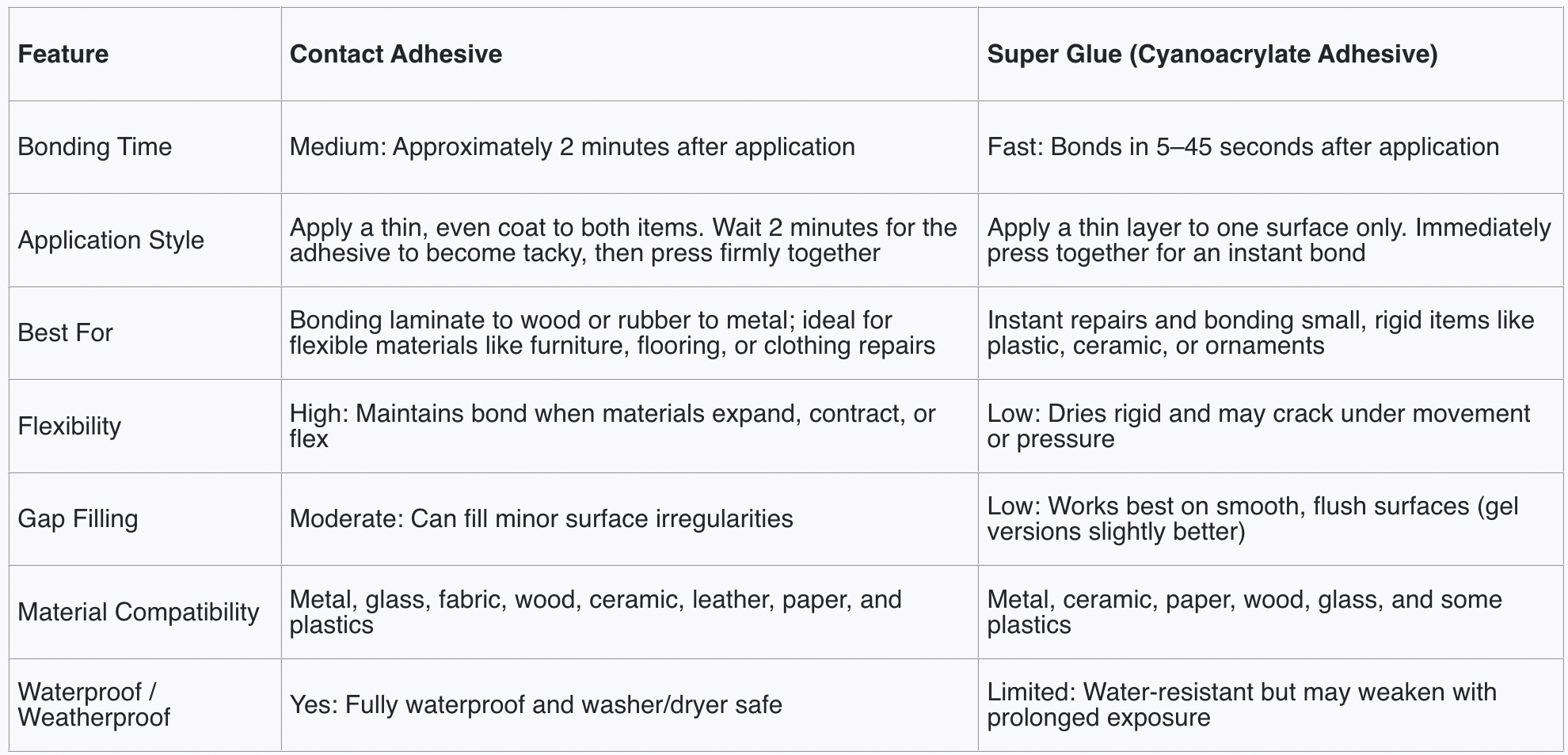
*Not suitable for Polypropylene (PP), Polyethylene (PE) or Polystyrene (PS) plastics.
* Not recommended for use on Polypropylene (PP) or Polyethylene (PE) plastics.
Pros & Cons:
Each adhesive has strengths and limitations depending on the repair project you’re working on and the type of bond you need. Here’s how contact adhesive and super glue compare:
Contact Adhesive
Pros:
- Excellent for bonding large, irregular, or flexible surfaces.
- Provides a durable, strong bond that is able to withstand heat.
- Many formulas, such as Gorilla Contact Adhesive Clear, are versatile and heavy-duty.
- It is 100% waterproof and can be used on a variety of surfaces, making it a perfect all-purpose adhesive.
- Works well on jobs that require large surface bonding.
Cons:
- Requires careful surface preparation for maximum bond strength.
- Compared to other glues, it has a slower application and drying time.
- It can be a messy process and harder to control.
- Not ideal for quick projects and precise repairs.
Super Glue (Cyanoacrylate)
Pros:
- Available in many formats, including a tube with a fine nozzle which is ideal for delicate and precise application.
- Best suited for small, quick repairs and precision fixes, especially in tight or small spaces.
- Gel super glue options stick well to vertical surfaces and offer improved control in certain applications.
- The compact design makes it easier to store in toolkits.
- Gorilla’s anti-clog cap prevents the formula from drying out in the bottle.
Cons:
- The bond forms quickly, leaving little room for repositioning or adjustments.
- Doesn’t bond well with porous surfaces, such as unfinished wood or objects coated with white glue.
When to Use Contact Adhesive or Super Glue:
Use Contact Adhesive When:
- You’re bonding porous and non-porous materials and need a flexible finish.
- You’re applying laminate sheets, veneers, or fabric to surfaces like cabinets or furniture.
- You need a strong bond that can withstand heat, moisture, and movement over time.
- The job involves large surface areas or needs a permanent, waterproof solution.
Top Tip: Try using Gorilla Contact Adhesive, a solvent-based adhesive that works well on wood, laminate, and other construction materials.
Use Super Glue When:
- You need a quick fix for a broken ceramic, plastic, or glass object.
- You’re working with non-porous surfaces or need a precision tip.
- You don’t have the knowledge or expertise to use more complex adhesives, but require a strong, instant repair.
Top Tip: Check out Gorilla Super Glue Gel, a no-run gel formula suited for jobs in vertical spaces.
Final Verdict
- For fast, small-scale jobs with hard materials, super glue is the clear winner.
- For larger projects, flexible materials, or where strength and durability matter, contact cement stands out as the top choice.
- If your DIY needs vary, it’s wise to have both adhesives on hand — just be mindful of their limitations. Whether you’re looking for a temporary fix or a permanent solution, it all starts with the right glue.
For More Tips and Advice
Still exploring adhesive options? The Gorilla Glue Blog is packed with practical guides to help you get the most out of your glue. For example, if you’re attaching glass to furniture or cabinetry, check out our How to Glue Mirror to Wood article for expert tips on choosing the best adhesive.
Information provided within this content is for informational and consideration purposes only.
For the toughest jobs on planet Earth®