

How Long Does Glue Take To Dry On Wood?
Heading
Always follow the product guidelines and give it the full cure before sanding, painting, or loading the joint.
Whether you’re fixing furniture, door frames, or doing small DIY repairs, drying time matters more than you might think. But there’s no single answer. It depends on the glue you’re using, how it’s applied, and the environment you’re working in.
Here’s what affects drying and curing times, and how to get a strong, lasting bond.
Understanding Glue, Drying and Curing Times
Polyvinyl acetate (PVA), epoxy glue, polyurethane, and cyanoacrylate all dry and cure at different rates. Remember that:
- Drying time is when the surface is dry to the touch, and the clamps can be removed
- Curing time refers to the full chemical reaction that gives the bond its full strength
For example, wood glue (PVA based) dries in 1-2 hours but cures in 24 hours. Meanwhile, super glue will dry in a matter of seconds and fully cures in 24 hours.
Factors That Affect Drying Time
- Several things affect how quickly your glue dries. Temperature and humidity are the biggest factors. Wood glue cures faster in warm conditions, while cold slows the process and can prevent a full cure. High humidity keeps glue from drying properly, and very dry air can cause it to set too fast. If the wood itself is damp, expect even longer drying times. This is why we don’t recommend use on damp or wet surfaces.Ventilation matters too. Good airflow speeds up evaporation, while a closed room can extend drying time significantly. How you apply the glue also plays a role. A thin layer will always dry faster than a thick one.
- Top tip: If you’re using polyurethane glue, remember it’s water-activated, so moisture actually helps it cure. PVA glue, on the other hand, prefers a stable, low-humidity environment to do its job properly.
Drying Times for Different Types of Wood Glue
Let’s break down the drying time and curing process for popular adhesives used in woodworking.
Gorilla Wood Glue
Also known as: Polyvinyl acetate (PVA), White or Yellow Wood Glue, or simply “Wood Glue”
Best for: General woodworking, indoor furniture, cabinets, and craft projects

Touch dry:1 hourClamp time:20 -30 minutesFull curing time:24 hours
Gorilla Glue Original
Also known as: Polyurethane glue or PU glue.
Best for: Outdoor projects, stressed joints, and moisture-prone environments

Touch dry:1–2 hoursClamp time:1–2 hoursFull curing time:24 hours
Gorilla Epoxy
Also known as: Two-part epoxy adhesive
Best for: Filling gaps, bonding metal, plastic*, wood, and dissimilar materials

Touch dry:5 minutesClamp time:30 minutesFull curing time:24 hours
*Not recommended for use on polyethylene or polypropylene plastic or similar materials
Gorilla Super Glue
Also known as: Cyanoacrylate adhesive
Best for: Small repairs, quick fixes, and tight-fitting surfaces
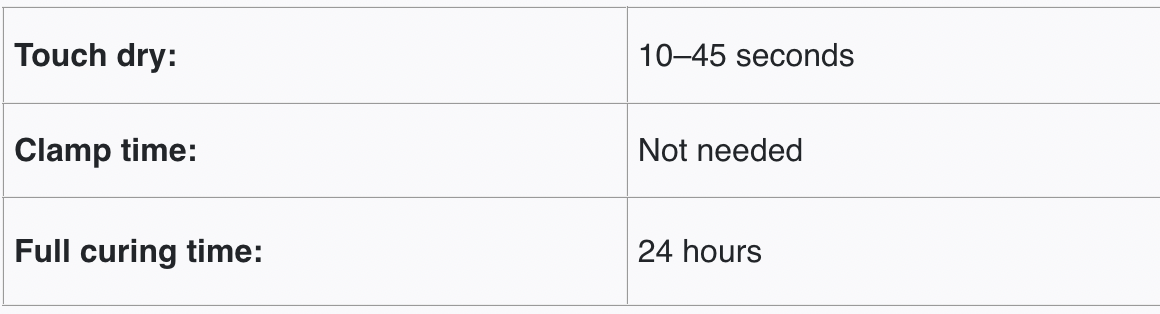
Touch dry:10–45 secondsClamp time:Not neededFull curing time:24 hours
How to Ensure Proper Drying and Curing
Regardless of the glue you’re using, always try to apply an even layer unless product guidelines state otherwise.
Once applied, clamp the joint tightly and evenly. Pressure helps eliminate gaps and ensures the glue spreads uniformly across the surfaces. Before the glue starts to set, clean up excess according to the directions on pack. It’s often easier to remove fresh glue than glue that’s cured.
Always follow the drying and curing times recommended in the product guidelines. These are based on optimal conditions and will give you the best results.
Keep your work area clean, dry and free of dirt, grease and oil. Most glues cure best in a warm, stable environment. If your space is cold or draughty, consider using a small heater or heat lamp.
If the air is too damp, open a window, use a fan, or try a dehumidifier. Good air movement helps moisture evaporate and keeps the drying process on track. Avoid sudden changes in temperature or humidity that could interfere with curing.
Top tip: If speed is a priority, switch to a fast-setting adhesive like super glue or a two-part epoxy. These adhesives bond quickly and don’t need long clamp times.
Common Gluing Mistakes
- Skipping surface prep. Glue won’t adhere properly to dirty, greasy, or dusty surfaces. Always clean and dry the surfaces before applying glue to ensure a solid bond.
- Removing clamps too soon. Even if the glue feels dry to the touch, it hasn’t necessarily cured. Removing clamps too early can cause the joint to shift or separate under pressure. Follow the recommended clamp time for the type of glue you’re using.
- Rushing the curing process. Once the glue is applied and clamped, it’s important to wait for the full curing time before stressing the joint. Sanding, painting, or applying weight to it too early can weaken the final bond or result in a poor finish.
Dry and Cure Your Adhesives Like a Pro
Most glues are touch-dry within 30 minutes to 2 hours but need around 24 hours to cure fully. The exact time depends on the glue, your materials, and your working conditions, so follow the product guidelines and give it the full cure before sanding, painting, or loading the joint.
For more woodworking tips and project guides, check out the Gorilla Glue Blog.
Information provided within this content is for informational and consideration purposes only.
For the toughest jobs on planet Earth®