

How To Remove Glue From Wood
Heading
This guide explains how to remove glue from wood safely. It covers different types of Gorilla Glue adhesives, the best removal methods, and how to avoid damaging finished wood surfaces.
Glue spills happen fast. One squeeze too much during a repair or DIY project can leave adhesive sitting on the wood surface.
The challenge is not only removing the glue. It’s removing it without damaging the surface underneath.
Different adhesives behave differently on wood. Some wipe away easily while still wet. Others cure into a hard layer that needs careful scraping or sanding to remove.
This guide explains how to remove glue from wood safely. It covers different types of Gorilla Glue adhesives, the best removal methods, and how to avoid damaging finished wood surfaces.
Why Some Glue Is Harder to Remove From Wood
Not all adhesives react the same way once they bond to timber.
Water-based Gorilla Wood Glue usually sits closer to the surface and is easier to clean before it dries. Polyurethane adhesives expand as they cure and harden into a dense foam-like material. Super glue bonds quickly and can soak into porous wood grain.
The type of wood also matters.
Unfinished wood absorbs adhesive more easily than sealed or varnished timber.
Open-grain woods can trap glue beneath the surface, making stains and shiny patches more noticeable after removal.
Start by Identifying the Glue Type
The safest removal method depends on the type of adhesive you are dealing with. Using the wrong solvent or removal technique can damage the wood surface or make cleanup harder.
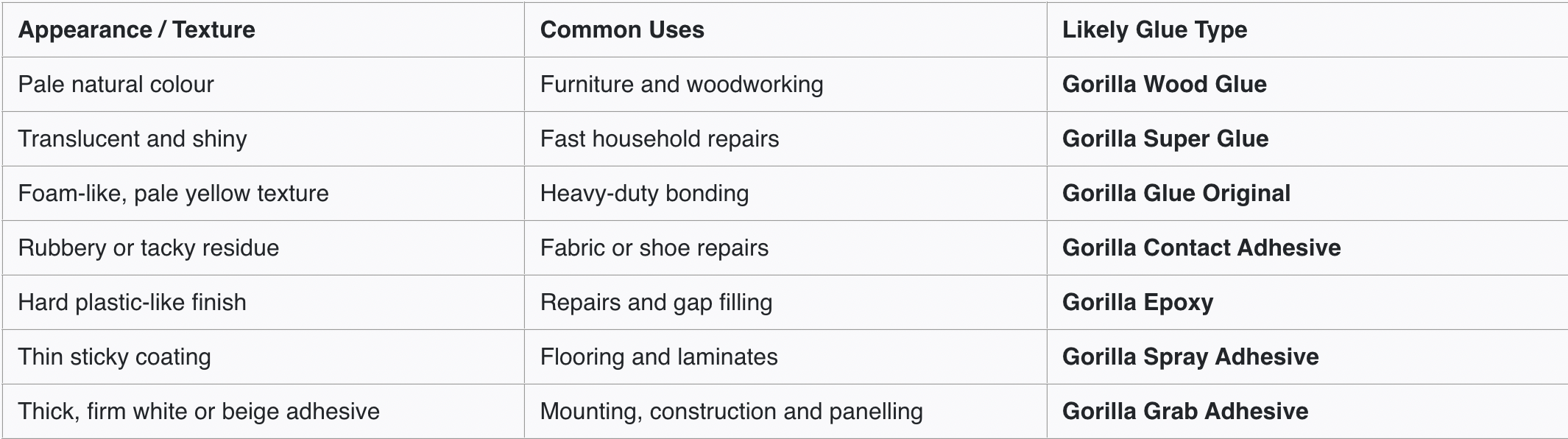
If you are unsure, start with the gentlest removal method first and avoid harsh scraping or strong solvents.
What You’ll Need
Before starting, gather these items:
- Clean dry cloths
- Warm soapy water
- Plastic scraper or putty knife
- Fine-grit sandpaper
- Isopropyl alcohol (IPA)
- Acetone or nail varnish remover
- Protective gloves
Always test solvents on a hidden area first. Some finishes and varnishes may become dull or discoloured.
Best Glue Removal Method by Adhesive Type
Different adhesives need different removal methods. The wrong approach can damage the wood surface or spread the glue further.
How to Remove Gorilla Glue Original From Wood
Polyurethane glue expands while curing.
For uncured glue:
- Wipe away excess using a dry cloth
- Use isopropyl alcohol if needed
- Avoid using water during cleanup
Once cured, Gorilla Glue Original becomes much harder to remove.
Cured adhesive usually requires:
- Scraping
- Sanding
- Careful mechanical removal
Because the glue expands as it cures, hardened excess may sit above the timber surface.
How to Remove Super Glue From Wood
Gorilla Super Glue sets quickly, so fast cleanup helps.
For wet glue:
- Blot excess adhesive with a cloth dampened with acetone or isopropyl alcohol
- Avoid wiping aggressively
- Test in an inconspicuous area first
For dried glue:
- Soak the area with warm soapy water or acetone for 30–45 minutes to soften the glue
- Then gently rub or lift the softened adhesive from the surface
- Several soaks may be necessary
Important Note: Acetone can affect painted, varnished, or laminated surfaces.
How to Remove Wood Glue From Wood
Wood glue is easiest to remove before it cures.
If the glue is still wet:
- Use a damp cloth to wipe away excess adhesive
- Wipe using a fresh section of cloth each time
- Remove glue from the grain before it dries
Warm water is usually enough for uncured wood glue.
If the glue has already dried:
- Use a plastic scraper carefully
- Sand away any remaining residue using fine-grit sandpaper
- Work with the grain to reduce scratches
Dried wood glue can block wood stain from absorbing evenly.
How to Remove Epoxy From Wood
Gorilla Epoxy is easiest to remove before it cures fully.
For wet epoxy:
- Wipe away excess using a dry cloth
- Remove any excess with soap and water, isopropyl alcohol or acetone
- Follow solvent instructions carefully
For cured epoxy:
- Scrape carefully in layers
- Sand remaining residue with fine-grit sandpaper
- Avoid forcing large sections off
Trying to force cured epoxy off too quickly can damage the wood.
How to Remove Contact, Grab and Spray Adhesives From Wood
Gorilla Contact Adhesives, Gorilla Grab Adhesives and Gorilla Spray Adhesive can remain sticky during removal, especially if partially cured.
For wet adhesive:
- Immediately remove excess using a dry cloth
- Isopropyl alcohol or suitable adhesive solvents may help remove residue
- Follow the manufacturer’s instructions carefully
For dried adhesive:
- Scrape carefully with a plastic scraper
- Sand lightly if residue remains
Top Tip: Work slowly to avoid spreading softened adhesive.
Common Mistakes When Removing Glue From Wood
Some removal methods can cause more damage than the glue itself.
Avoid these common mistakes:
- Scraping aggressively against the wood grain
- Using too much acetone on finished wood
- Starting with coarse sandpaper
- Letting wet glue spread during cleanup
- Applying heavy pressure with metal tools
- Rushing cured adhesive removal
A slower approach usually gives a cleaner result.
Can Glue Permanently Stain Wood?
Some adhesives can soak into porous timber and leave visible marks, especially on unfinished wood.
This is more common with:
- Super glue
- Polyurethane glue (Gorilla Glue Original)
- Epoxy
Possible signs include:
- Dark patches
- Shiny areas
- Uneven stain absorption
Light sanding may improve the appearance, but deeper staining may require refinishing.
Final Thoughts
Removing glue from wood is usually easiest before the adhesive fully cures. The right method depends on the type of glue involved and whether the timber is finished or unfinished.
By using the correct method, you can usually lift the adhesive and protect the wood underneath.
Good preparation and careful application can also help create cleaner results with less cleanup afterwards.
For more guides, tips, and DIY articles, check out the Gorilla Glue Blog.
Information provided within this content is for informational and consideration purposes only.
For the toughest jobs on planet Earth®